
Local school food system transformation takes time, dedication, and a commitment to ensuring the next generation has the knowledge and support they need to succeed.
With funding from the USDA, these Lake Michigan School Food System Innovation Hub grantees have designed unique, hands-on opportunities for high school and culinary students to pursue careers in farming, food sourcing, food preparation, and more.
Rising Suns: Expanding Food Sovereignty Efforts of the Menominee Indian Tribe
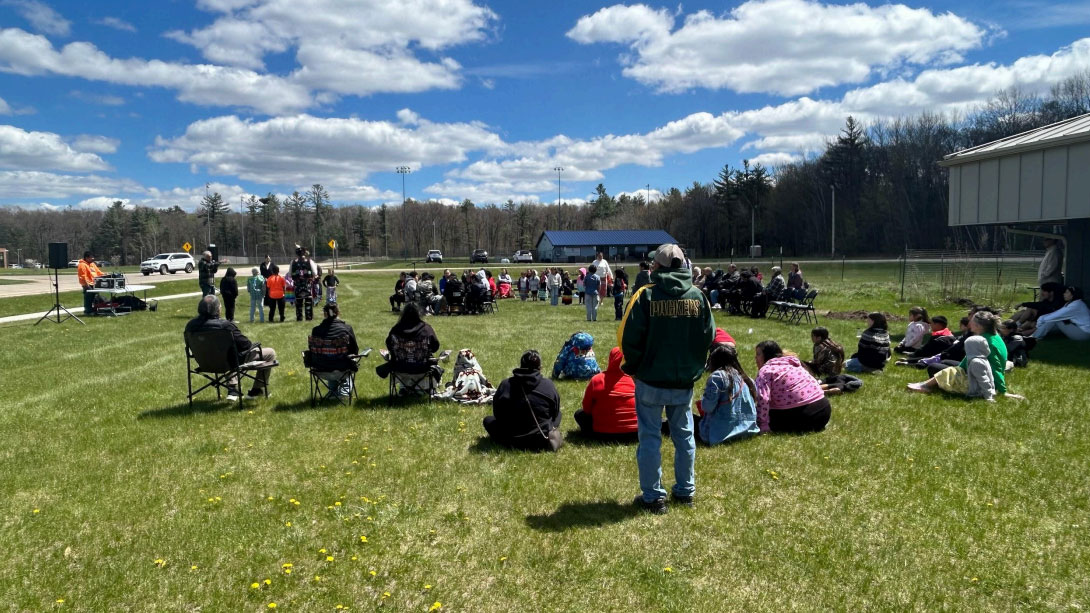
Forty-five miles northwest of Green Bay, in Menominee, Wisconsin, the Rising Suns project is introducing students to careers in agriculture, natural resources, and food system resilience.
At the center of this 2024 Innovation Collaborative-funded initiative is the establishment of a new Future Farmers of America program, which will have a lasting impact on the high school students and the agricultural workforce.
Under the leadership of Klint Hischke, a Menominee Indian High School educator, students receive hands-on training in a mixture of traditional and Western practices that bring food from farm to table.
Students take the lead in planting and maintaining two growing sites: one for annual crops, and the other a perennial garden containing strawberries, blueberries, asparagus, and a variety of fruit and nut trees. The lessons stretch from the farm—including instruction on how to operate farm equipment, bail hay, and raise and care for animals—to the cafeteria, through food safety classes.
“When we initially started the project, and they looked at the ground, they couldn’t believe that we were going to have a garden out of just a dirt area,” said Hischke. “I think it was amazing for them to be able to see everything progress and grow and then be able to harvest it.”
During harvest season, the students were able to use a commercial kitchen through the Menominee Indian Tribe of Wisconsin’s (MITW) Department of Agriculture and Foods Systems. “We went through the process of teaching the students how to process the foods, and we learned how to can, bake, and cook all of these foods,” said Hischke.
Students, local growers, elders, and tribal agricultural leaders that make the program possible are compensated for their contributions.
“We’re not just growing food,” said Hischke. “We’re growing a new generation of leaders equipped to steward the land, nourish their people, and transform the school food system from the ground up.”
School Nutrition Culinary Innovators of Tomorrow
Many students enrolling in a local culinary education program directly from high school may not have held a job in a commercial kitchen—or understand the breadth of available opportunities.
Through the School Nutrition Culinary Innovators of Tomorrow program, they can discover meaningful career paths in school nutrition while strengthening the culinary and labor capacity of school kitchens.
A regional collaboration of Wisconsin school food system partners, the Culinary Innovators program is a 2024 Innovation Collaborative grantee. Co-led by REAP Food Group and Wello, the team’s School Food Stage (SFS) traineeship addresses workforce challenges while advancing scratch-cooking goals.
The inaugural SFS traineeship engaged students from Madison College and Northeast Wisconsin Technical College (NWTC). For 14 weeks, students learned how their skills could support school nutrition programs. The students then spent two weeks at a local farm—either Seasonal Harvest or Rooted—to learn how to build and grow connections with school nutrition programs.
“We have amazing school food service directors that have been participating in farm to school since 2010 intentionally and intensively, and we wanted to elevate their work and share their knowledge with these new culinary students,” said Beth Heller, Wello’s Director of Strategic Partnerships and one of the project leads, along with Allison Pfaff Harris, Farm to School Director at REAP Food Group.
After receiving training, SFS intern Rodney began working as a substitute with the Unified School District of De Pere school nutrition team. Rodney continues to support current interns on an as-needed basis and remains a sub at De Pere. “Over the summer we fed kids in the park [through the De Pere School District summer meals], and the kids would get so excited!” he said. “Each dish I prepared for them they would say ‘Oh! the chef is here!’”
“Working with a school district is a really good career path, working schedule, with good benefits,” said Heather Reitmeyer, De Pere’s School Nutrition Director. “Bringing a culinary trained person into our kitchen elevates our food program.”
In addition to developing recipes, SFS interns are leading taste tests with students, collecting and incorporating their feedback, and participating in semi-scratch cooking.
The traineeship’s insights and creative approaches have sparked excitement among a variety of potential partners across the state.
“If we know what Wisconsin farmers are growing through the Wisconsin Department of Agriculture, and we know what our schools are cooking through the Department of Public Instruction and our school kitchens, we can begin to have a unified, state-level commitment to supporting our local farmers,” said Heller. “[We can] bring their food into our public institutions, so we’re always reinvesting in Wisconsin.”
Learn about Innovation Hub-funded professional training programs in three Central Illinois high schools.
And That’s Not All!
Creating these workforce pathways is part of a larger, intergenerational shift—one that builds a connection to local food long before careers take shape. Across the region, Innovation Hub projects show that hands-on food experiences at all ages can change habits, open doors, and build lasting confidence.
“On Monday, at one of our family engagement cooking classes, I think I saw each parent’s jaw drop at some point when they saw their kid eating—and liking!—a vegetable they hadn’t dreamed of trying to serve their kid. There were beets, Brussels sprouts, butternut squash, baby brassica greens, etc. The reason a lot of parents haven’t tried serving these foods is because they can’t afford to waste money on food that is likely to be thrown away. Offering a no-cost way for their kids to sample these foods opened up nutritional pathways that might not have been accessible otherwise.”
— Laura Arico
President of Madison Youth Unlimited
Partner in Madison School’s Growing Minds project, a 2024 Innovation Collaborative Grantee